Containerised RO Plant Guide
As demand for reliable freshwater continues to grow worldwide, containerised reverse osmosis (RO) plants are becoming an increasingly practical solution for seawater desalination, brackish water treatment and industrial water supply.
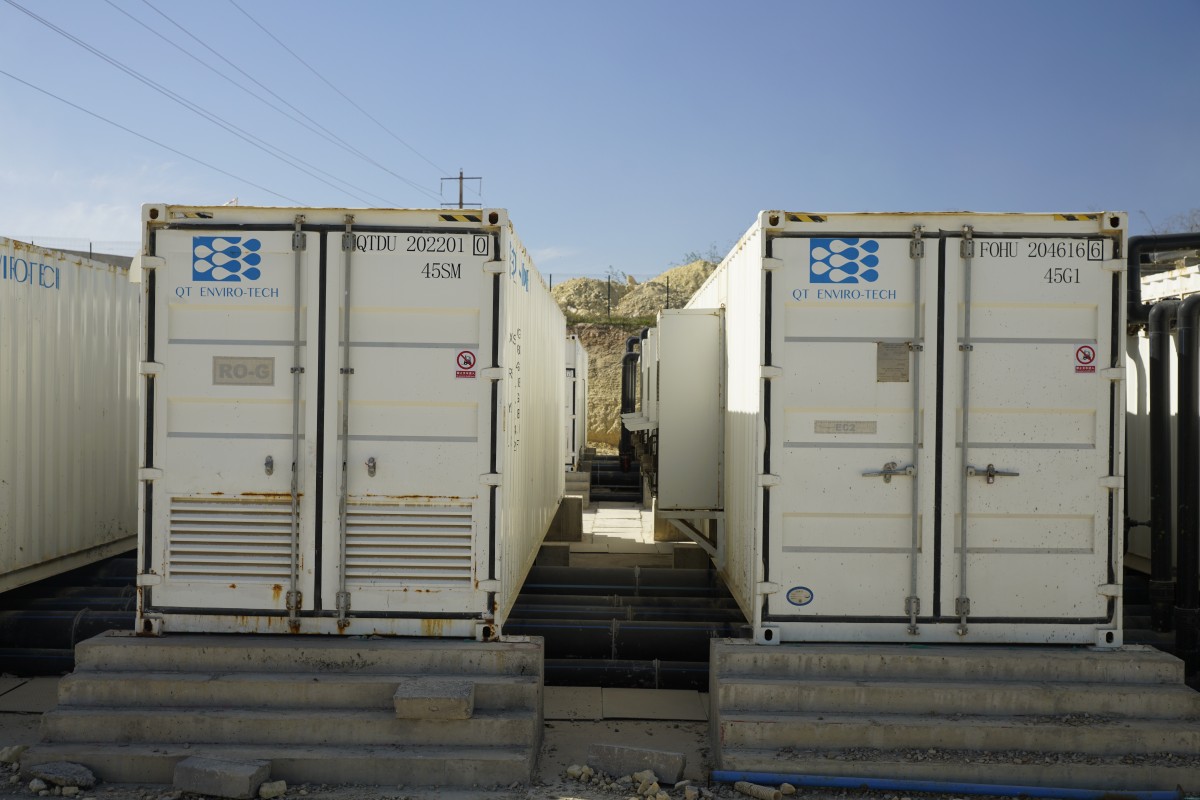
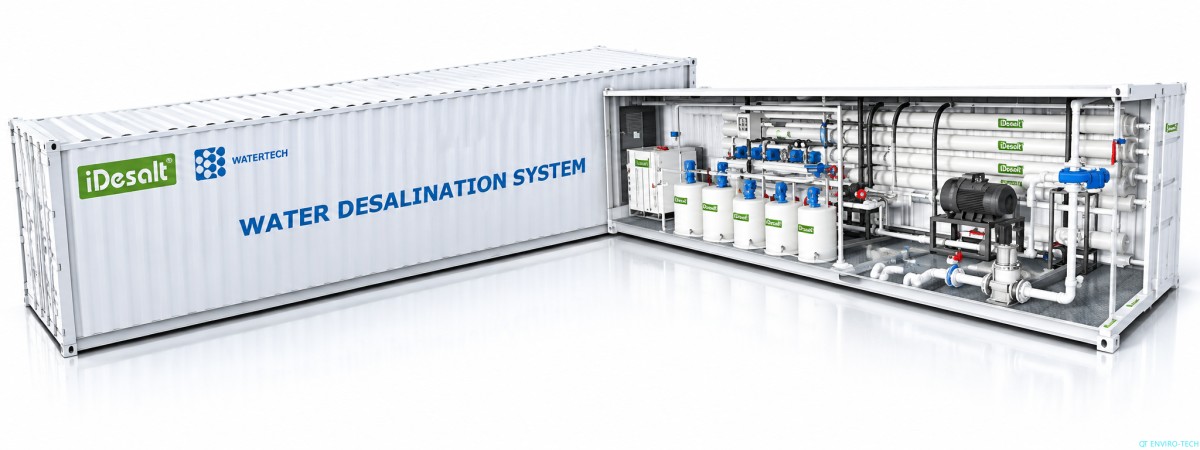
| A Containerised RO Plant is a water treatment system that integrates reverse osmosis technology and associated treatment equipment into one or more standard shipping containers. Designed for convenient transportation, modular installation and flexible operation, it provides a compact and efficient approach to producing freshwater in locations where conventional water treatment facilities may be difficult or time-consuming to construct. |

For remote communities, islands, coastal facilities, industrial sites and temporary projects, containerised RO systems offer a flexible alternative to traditional on-site water treatment plants.
SECTION 1
1. How Does a Containerised RO Plant Work?
A containerised RO plant uses reverse osmosis membrane technology to remove dissolved salts, minerals and other impurities from feedwater.
During operation, feedwater passes through a pretreatment system before being pressurised and delivered to the RO membrane modules. Under high pressure, water molecules pass through the semipermeable membranes, while most dissolved salts and other contaminants are rejected and discharged as concentrated brine.
The treated water can then undergo post-treatment, such as remineralisation and disinfection, depending on the required water quality and intended application.

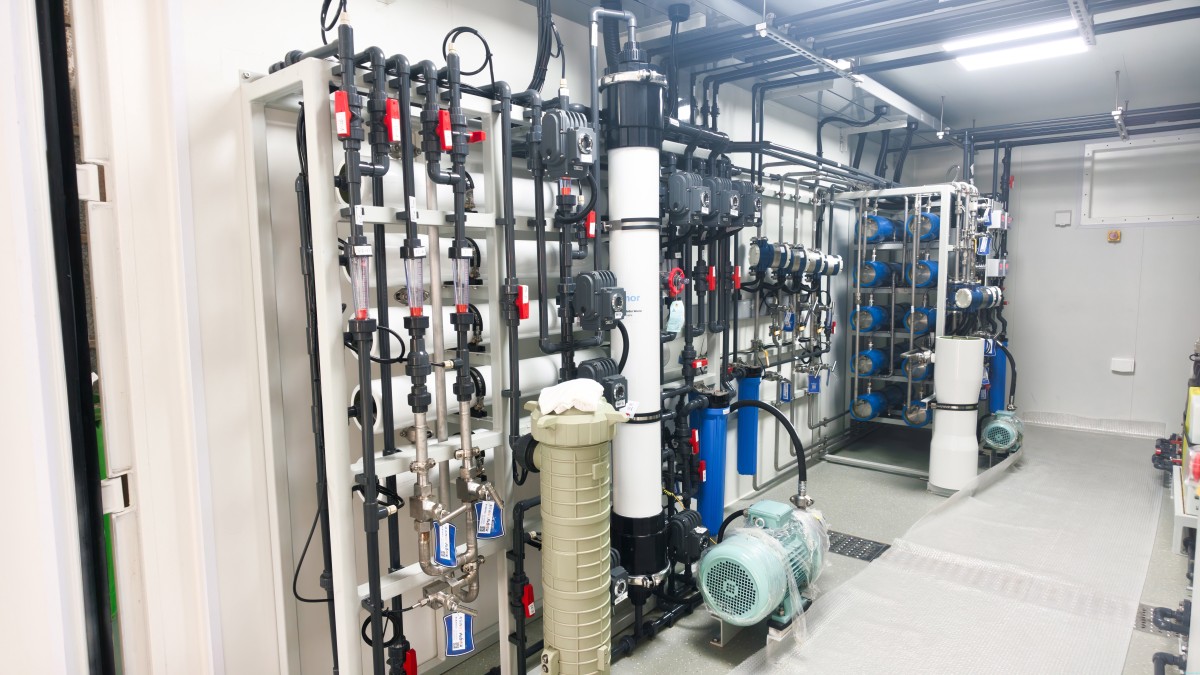
Typical components
| Feedwater Intake System | Supplies seawater, brackish water or other feedwater sources. |
| Pretreatment System | Removes suspended solids, particles and other substances that may affect membrane performance. Depending on feedwater quality, this may include multimedia filtration, ultrafiltration and cartridge filtration. |
| High-Pressure Pump | Provides the pressure required for the reverse osmosis process. |
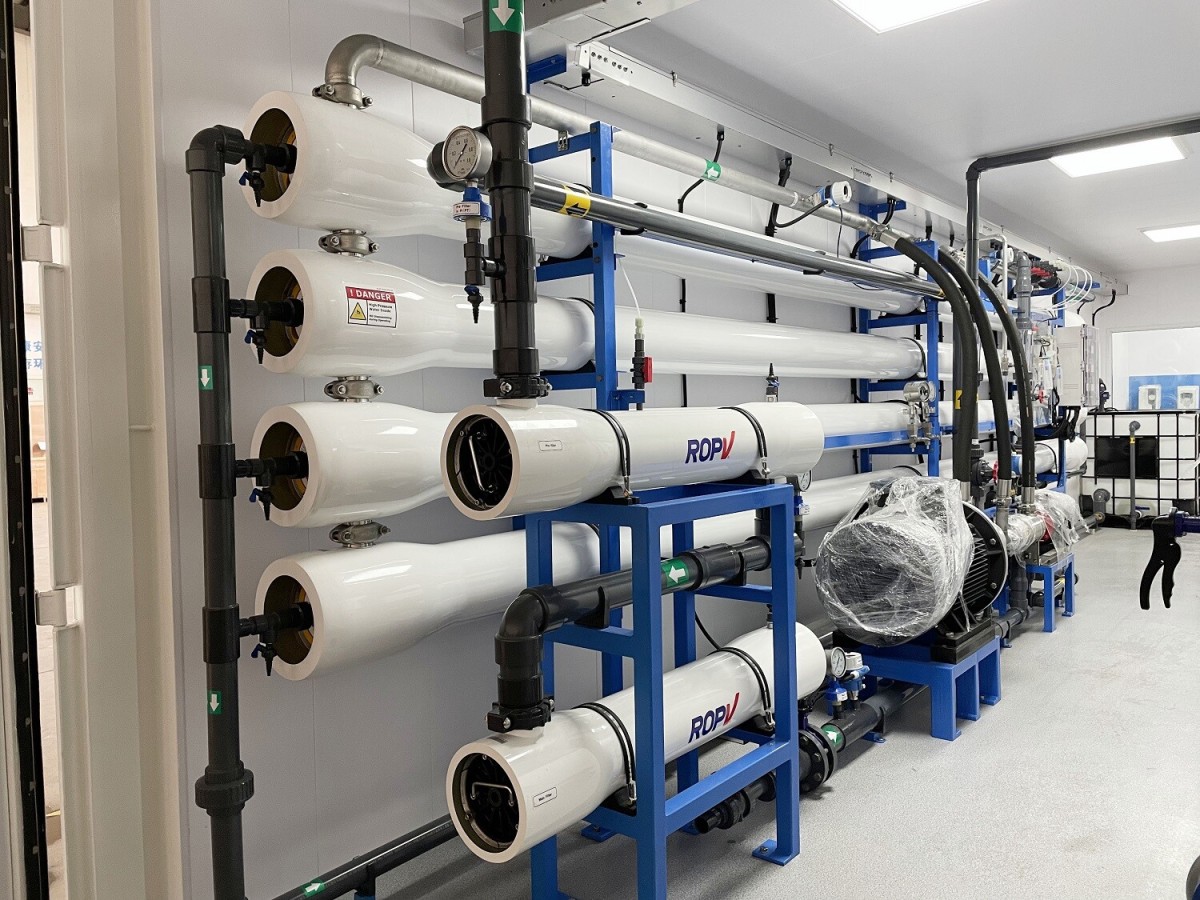
| RO Membrane System | Separates dissolved salts and impurities from water. |
| Energy Recovery Device | Where applicable, recovers hydraulic energy from the high-pressure brine stream to improve energy efficiency in seawater desalination applications. |
| Post-Treatment System | Adjusts water quality through remineralisation, pH correction or disinfection as required. |
| Control and Monitoring System | Monitors operating parameters and supports automated operation and process control. |
The actual process configuration depends on feedwater characteristics, treatment capacity, required product water quality and project conditions.
SECTION 2
2. Main Types of Containerised RO Plants
Containerised RO plants can be configured for different water sources and treatment requirements.
2.1 Containerised Seawater RO Plant (SWRO)

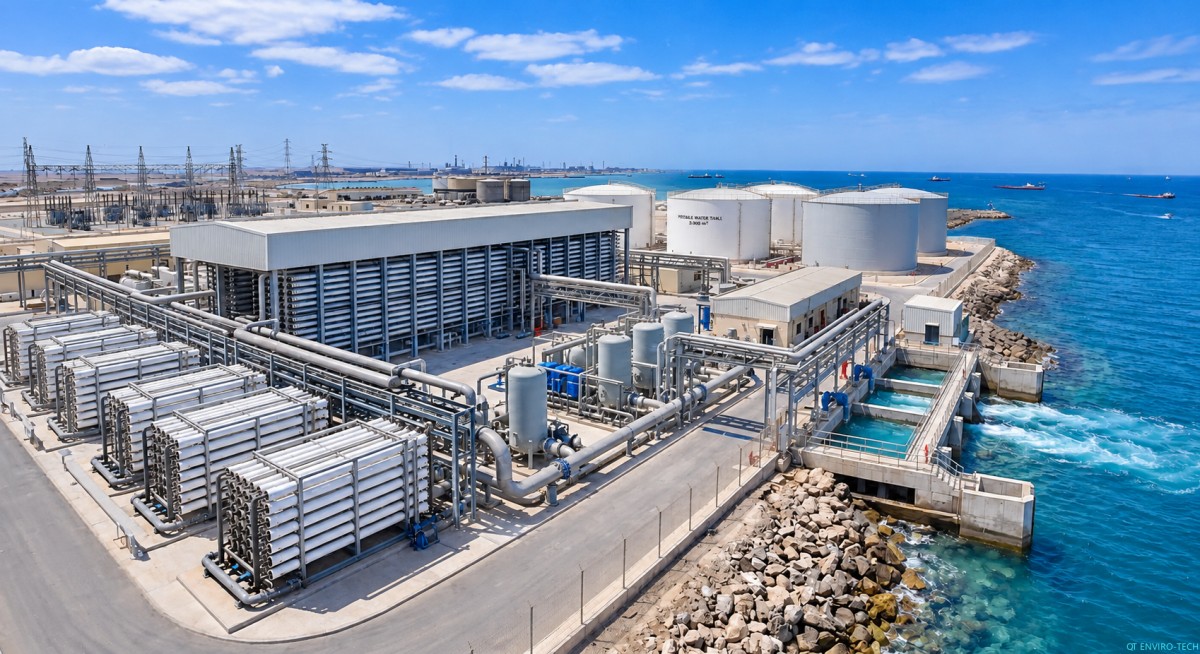
A containerised seawater reverse osmosis plant is designed to convert seawater into freshwater by removing dissolved salts through high-pressure membrane separation.
It is widely used for:
| Island and coastal water supply | Resorts and hotels | Offshore facilities |
| Coastal industrial projects | Remote communities | Emergency freshwater supply |
For seawater desalination, the system typically requires high-pressure pumps, seawater-resistant materials, appropriate pretreatment and, where suitable, energy recovery devices.
2.2 Containerised Brackish Water RO Plant (BWRO)
A containerised brackish water reverse osmosis plant treats groundwater or other water sources with elevated salinity.
Compared with seawater RO systems, brackish water RO systems generally operate at lower pressures, depending on feedwater salinity and the required treatment performance.
Typical applications include:
| Industrial process water | Mining operations | Agricultural water supply |
| Remote groundwater treatment | Municipal and community water supply | |
2.3 Modular and Skid-Mounted RO Systems
In addition to containerised configurations, RO equipment can be designed as modular or skid-mounted systems.
These configurations allow individual treatment units to be manufactured, transported and installed according to project requirements. They are particularly suitable for facilities with existing buildings, dedicated equipment rooms or specific installation constraints.
SECTION 3
3. Key Benefits of a Containerised RO Plant
| 3.1 | Compact and Integrated DesignA containerised RO plant integrates major treatment equipment into a compact structure, reducing the need for extensive on-site equipment installation. |
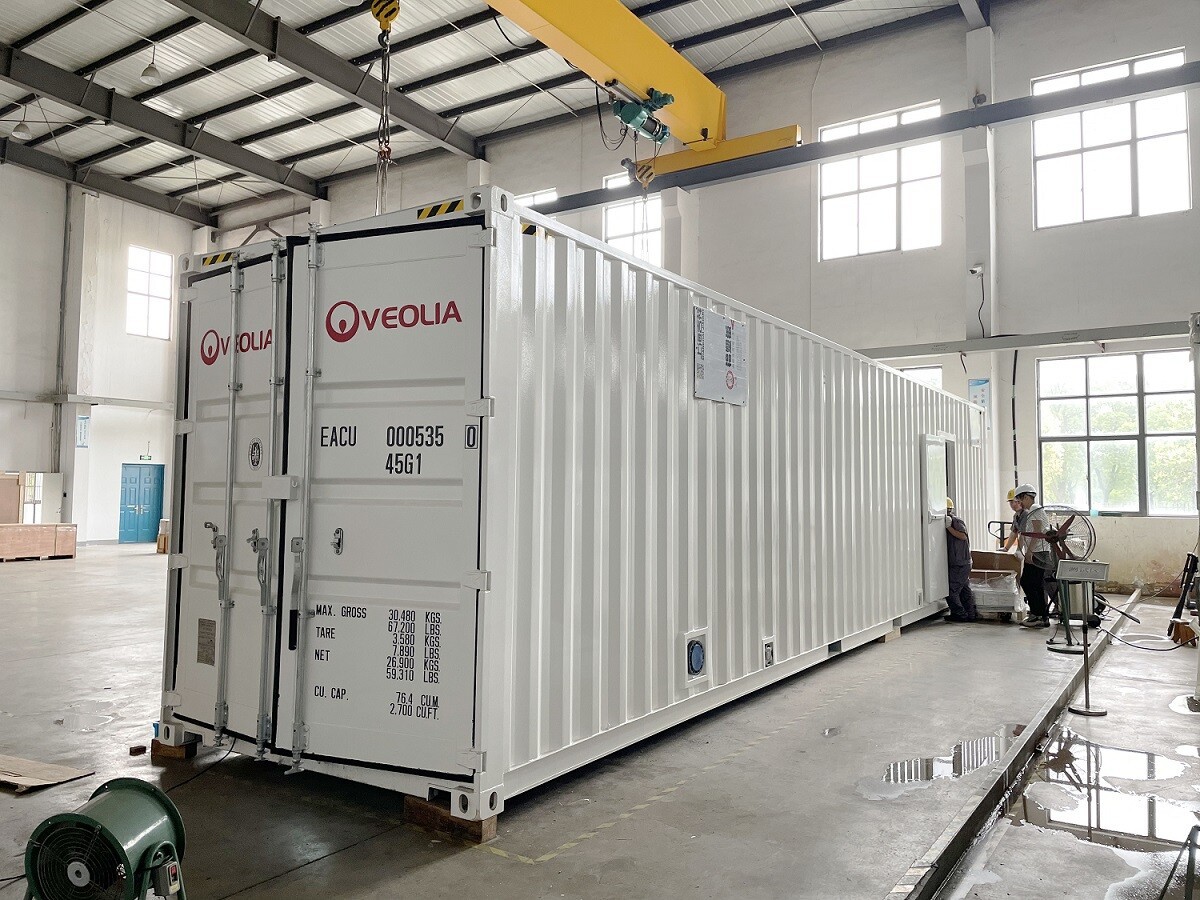
| 3.2 | Faster Installation and CommissioningSince major equipment and piping can be assembled and tested before delivery, on-site installation and commissioning work can be reduced. Actual project schedules depend on site preparation, utilities, civil works and system complexity. |
| 3.3 | Flexible Transportation and DeploymentStandardised container dimensions facilitate transportation by road, sea and other suitable logistics methods. This makes containerised RO systems particularly useful for islands, remote locations and temporary projects. |
| 3.4 | Modular ExpansionMultiple containerised units can be arranged in parallel or integrated into larger treatment facilities to meet different water production requirements. |
| 3.5 | Integrated Operation and MonitoringModern containerised RO plants can incorporate automated control systems, instrument monitoring and remote operation functions, helping operators monitor system performance and manage daily operations. |
| 3.6 | Reduced On-Site Construction RequirementsFactory integration can reduce the amount of equipment assembly required at the project site. However, foundations, utility connections, intake and discharge facilities, and other supporting infrastructure may still be necessary. |
SECTION 4
4. Where Are Containerised RO Plants Used?
Containerised RO systems are suitable for a wide range of applications where reliable freshwater production is required.
| Islands and Remote Communities | For islands and geographically isolated communities, seawater desalination can provide an independent freshwater source and reduce dependence on transported water. |
| Hotels and Resorts | Coastal resorts and island hotels can use containerised seawater RO systems to support daily freshwater demand. |
| Industrial Facilities | Manufacturing plants, mining operations and industrial parks may use containerised RO systems to produce process water and support production activities. |
| Offshore and Coastal Projects | Compact and integrated equipment configurations make containerised systems suitable for selected offshore and coastal applications, subject to transportation, space and operating requirements. |
| Emergency and Temporary Water Supply | Containerised RO plants can be considered for temporary projects and emergency water supply where conventional infrastructure is unavailable or insufficient. |
SECTION 5
5. How to Choose the Right Containerised RO Plant
Selecting the right containerised RO plant requires more than choosing a treatment capacity. A suitable system should be engineered around the actual feedwater conditions and project requirements.
Key factors include:
| 01 | Feedwater QualityDetermine whether the water source is seawater, brackish groundwater or another type of feedwater. Salinity, turbidity, temperature and other water quality parameters affect system design. |
| 02 | Required Water Production CapacityDefine the required daily freshwater production capacity, typically expressed in m³/day. The system should be designed to meet both current demand and potential future requirements. |
| 03 | Product Water QualityEstablish the required water quality according to its intended use, such as drinking water, industrial process water or utility water. |
| 04 | Pretreatment ConfigurationPretreatment should be selected according to feedwater quality to protect RO membranes and support stable operation. |
| 05 | Energy ConsumptionEvaluate the energy requirements of pumps, membrane systems and auxiliary equipment. For seawater desalination, energy recovery technology may help improve overall energy efficiency. |
| 06 | Installation and Operating ConditionsConsider available space, climate, transportation access, power supply, water intake and brine discharge arrangements, as well as maintenance accessibility. |
| 07 | Manufacturer's Engineering ExperienceChoose a manufacturer with relevant project experience, engineering capabilities, equipment manufacturing expertise and technical support throughout installation and operation. |
SECTION 6
6. QT ENVIRO-TECH: Containerised RO Plant Manufacturer and Water Treatment Solution Provider

QT ENVIRO-TECH (SUZHOU) LTD specializes in membrane separation technology, seawater desalination and industrial wastewater treatment and resource recovery.
30+ years Water treatment experience
within the QT Group | 10+ years Engineering practice
at QT ENVIRO-TECH | 30+ countries Water treatment
projects delivered |
We provide integrated water treatment solutions covering engineering design, equipment manufacturing, installation and commissioning, equipment rental, operation and maintenance. Our containerised RO solutions are designed to address different water sources, treatment capacities and project conditions.
Our capabilities include:
| Containerised Seawater Reverse Osmosis (SWRO) Systems | Containerised Brackish Water Reverse Osmosis (BWRO) Systems | Modular and Skid-Mounted RO Systems |
| Industrial Wastewater Treatment and Water Recovery | Zero Liquid Discharge (ZLD) and Resource Recovery Solutions | |
Our fastRO® product range provides containerised seawater desalination solutions for large-scale water supply applications, with system capacities ranging from 5,000 to 20,000 m³/day across applicable configurations.
We have delivered water treatment projects in more than 20 countries, serving customers in different industries and geographical environments. From initial engineering design to equipment delivery and technical support, QT ENVIRO-TECH is committed to providing practical and reliable water treatment solutions.
SECTION 7
7. Frequently Asked Questions (FAQ)
| Q1 | What is a containerised RO plant?A containerised RO plant is an integrated reverse osmosis water treatment system installed within one or more shipping containers. It is designed to simplify transportation, installation and deployment. |
| Q2 | What types of water can a containerised RO plant treat?Depending on system configuration, containerised RO plants can treat seawater, brackish water and other suitable feedwater sources. |
| Q3 | What is the difference between SWRO and BWRO?SWRO systems are designed for seawater desalination and generally operate at higher pressures due to the higher salinity of seawater. BWRO systems treat brackish water and typically operate at lower pressures, depending on feedwater conditions. |
| Q4 | Can a containerised RO plant be customised?Yes. System design can be customised according to feedwater quality, treatment capacity, product water requirements, site conditions and project specifications. |
| Q5 | How long does it take to install a containerised RO plant?Installation time depends on equipment size, project complexity, site readiness and supporting infrastructure. Factory integration and pre-delivery testing can help reduce on-site installation work. |
| Q6 | What is the typical capacity of a containerised RO plant?Capacity varies depending on water source, equipment configuration and project requirements. Small and medium-capacity systems can be integrated into individual containers, while larger systems may use multiple containers or modular equipment arrangements. |
SECTION 8
8. Request a Customised Containerised RO Plant Solution
Looking for a reliable containerised RO plant manufacturer for your seawater desalination or brackish water treatment project?
QT ENVIRO-TECH provides customised RO systems and integrated water treatment solutions for industrial facilities, islands, coastal communities and remote projects. Contact our engineering team to discuss your feedwater quality, required capacity and project specifications.
| |
Contact our engineering team for a customised solution Request a Quotation QT ENVIRO-TECH — Sourcing freshwater from the sea, reclaiming value from wastewater. |
| |