
Introduction
With increasing freshwater demand and growing water scarcity in coastal and island regions, reliable seawater desalination has become an important solution for sustainable water supply. Among various desalination technologies, Mobile Sea Water Reverse Osmosis (SWRO) Treatment Plants offer a flexible and efficient approach to converting seawater into freshwater, particularly in locations where conventional water infrastructure is limited or difficult to establish.
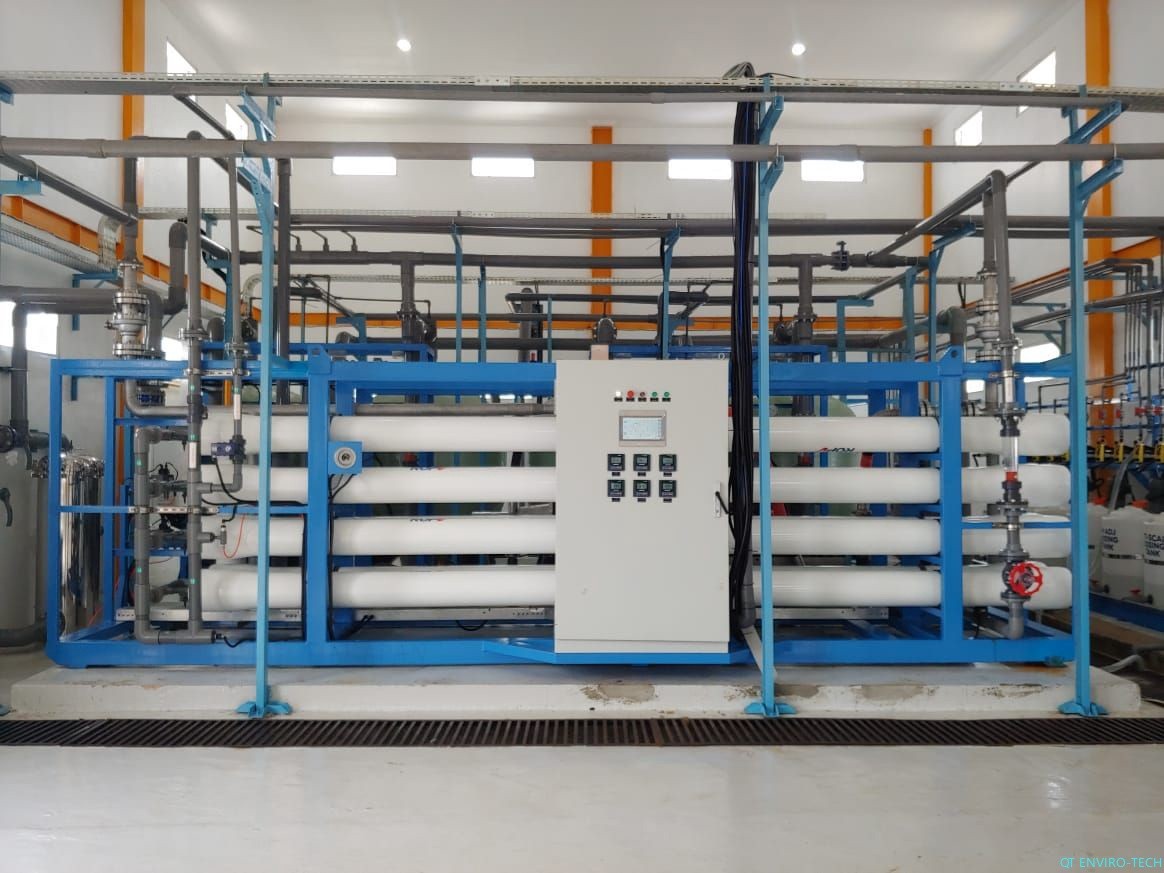
A mobile SWRO treatment plant integrates seawater pretreatment, reverse osmosis membrane technology, pumping systems, and intelligent control into a compact, modular configuration. Designed for convenient transportation and on-site installation, these systems provide a practical solution for islands, coastal communities, construction projects, offshore facilities, resorts, and remote industrial sites.
As a professional water treatment solution provider, QT ENVIRO-TECH specializes in seawater desalination and industrial wastewater treatment, delivering customized membrane-based solutions for customers worldwide.
1. What Is a Mobile Sea Water Reverse Osmosis (SWRO) Treatment Plant?
A Mobile Sea Water Reverse Osmosis (SWRO) Treatment Plant is a compact desalination system designed to remove dissolved salts and impurities from seawater through reverse osmosis membrane separation.
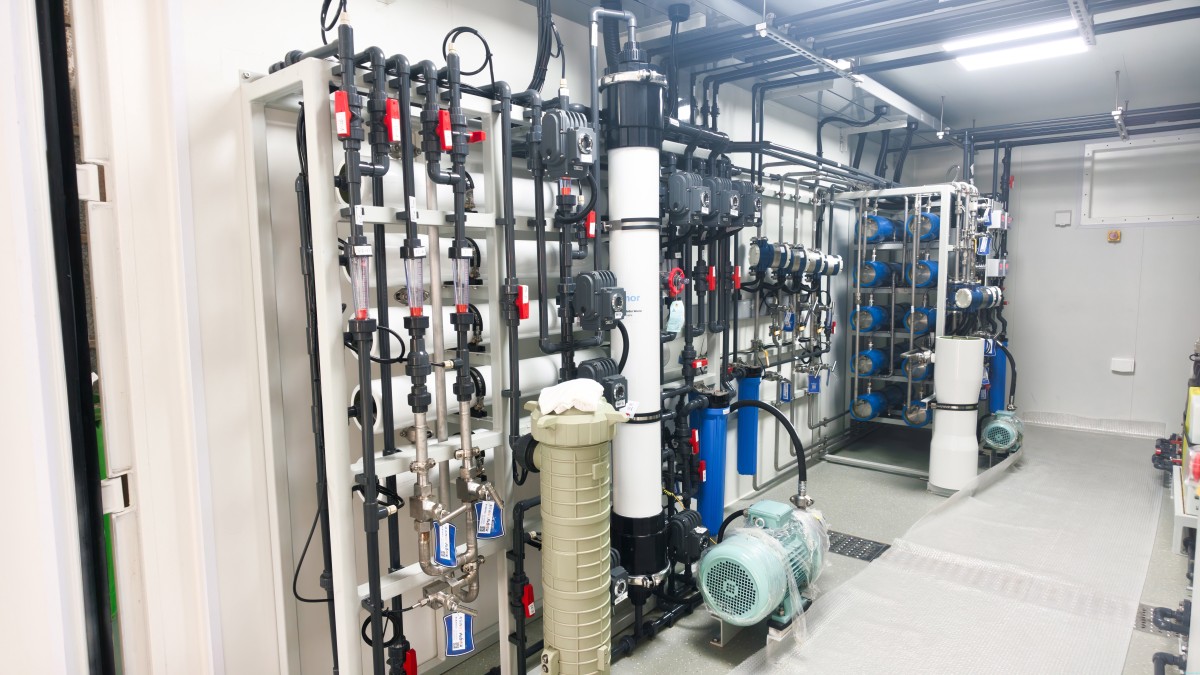
Unlike conventional large-scale desalination facilities that require extensive civil construction and fixed infrastructure, mobile SWRO plants can be supplied in containerized or modular configurations.
The system typically integrates:
Seawater Intake System: Collects raw seawater from the ocean or coastal water source.
Pretreatment System: Uses multimedia filtration (MMF), ultrafiltration (UF), or other suitable processes to reduce suspended solids and protect downstream membranes.
High-Pressure Pumping System: Provides the operating pressure required for seawater reverse osmosis.
SWRO Membrane System: Separates dissolved salts and produces freshwater through membrane filtration.
Post-Treatment System: Includes remineralization, pH adjustment, and disinfection when required for the intended water application.
Automatic Control System: Monitors operating parameters and supports reliable system operation.
The configuration can be customized according to seawater quality, required freshwater capacity, installation conditions, and final water quality standards.
2. Key Advantages of Mobile SWRO Desalination Plants
Flexible and Modular Design
Containerized SWRO systems integrate major treatment components into compact units, making transportation, installation, and relocation more convenient.
Modular configurations also allow multiple treatment units to be combined when additional water production capacity is required.
Faster Project Deployment
Compared with conventional on-site plant construction, prefabricated and factory-assembled desalination equipment can reduce installation complexity and on-site construction work.
This is particularly beneficial for remote islands, temporary construction sites, and projects with limited infrastructure.
Reliable Freshwater Production
Advanced seawater reverse osmosis membrane technology provides effective salt removal and consistent freshwater production when properly designed and operated.
Pretreatment selection, membrane configuration, operating pressure, and post-treatment are optimized according to project conditions.
Intelligent Monitoring and Control
Modern mobile SWRO plants can incorporate PLC-based automation, operating parameter monitoring, and remote monitoring functions.
These capabilities help operators monitor system performance, identify operating abnormalities, and manage equipment operation more efficiently.
Customized Capacity and Configuration
Every desalination project has different requirements. Mobile SWRO systems can be engineered according to freshwater demand, seawater characteristics, available installation space, and power supply conditions.
3. Typical Applications of Mobile Seawater Reverse Osmosis Systems
Mobile and containerized SWRO treatment plants are suitable for a wide range of water supply applications.
Island and Remote Community Water Supply
Many islands and remote coastal communities have limited access to conventional freshwater resources. Mobile seawater desalination systems provide an independent freshwater source for residential and public water supply.
Coastal Resorts and Tourism Facilities
Hotels, resorts, and tourism developments in coastal and island destinations require a stable water supply to support daily operations. Containerized SWRO plants offer a compact solution that can be adapted to local water demand.
Construction Sites and Infrastructure Projects
Large construction projects in coastal or remote locations often require temporary or long-term freshwater supplies. Mobile desalination equipment can be deployed to support construction activities and on-site operations.
Offshore and Industrial Applications
Offshore facilities, industrial developments, and remote production sites may require dedicated freshwater treatment systems. Customized SWRO solutions can be designed to meet specific operational and water quality requirements.
Emergency and Temporary Water Supply
Following natural disasters or disruptions to existing water infrastructure, mobile desalination plants can provide an alternative freshwater source, subject to transportation, seawater intake, power, and site conditions.
4. How to Select the Right Mobile SWRO Treatment Plant
Selecting a suitable mobile seawater reverse osmosis system requires consideration of several important factors:
Required Water Production Capacity: Determine the daily freshwater demand, typically measured in m³/day.
Seawater Quality: Evaluate salinity, temperature, turbidity, and other relevant water quality parameters.
Pretreatment Requirements: Select suitable filtration technologies according to raw seawater conditions.
Final Water Quality: Define whether the treated water will be used for drinking, domestic, industrial, or other applications.
Installation and Transportation Conditions: Consider container dimensions, available space, lifting arrangements, and site accessibility.
Power Supply and Energy Consumption: Evaluate local electricity availability and operating costs.
Automation and Maintenance: Consider control systems, remote monitoring, membrane cleaning, and long-term maintenance requirements.
Working with an experienced SWRO engineering company helps ensure that the system configuration matches actual project requirements.
5. QT ENVIRO-TECH: Customized Mobile SWRO Desalination Solutions
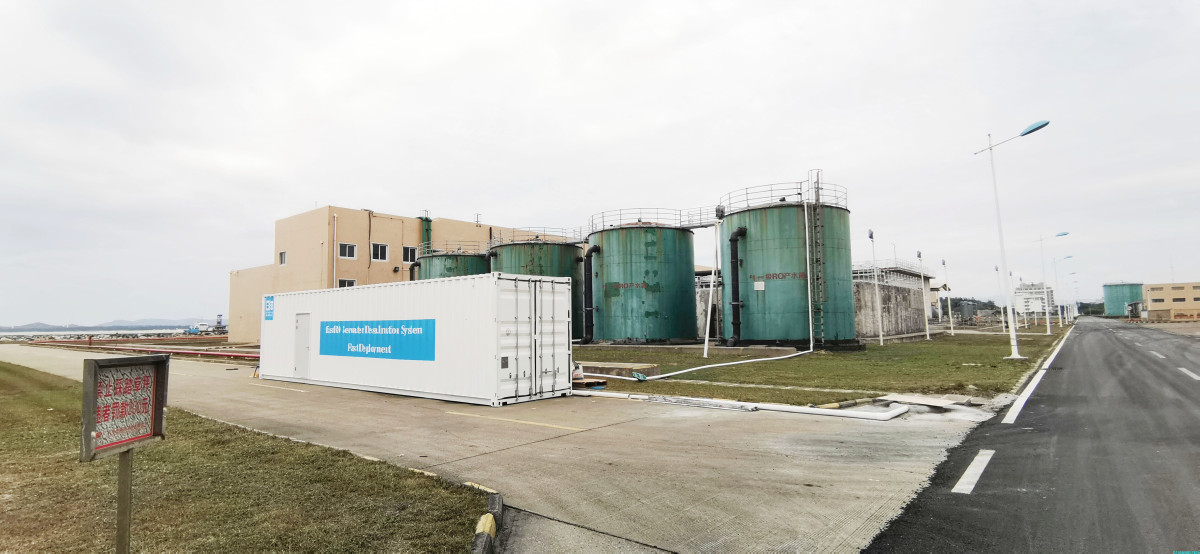
Established in 2011, QT ENVIRO-TECH (SUZHOU) LTD specializes in membrane separation technology, seawater desalination, and industrial wastewater treatment.
With extensive project experience and engineering capabilities, QT ENVIRO-TECH provides integrated water treatment solutions covering engineering design, equipment manufacturing, installation and commissioning, equipment rental, and operation and maintenance services.
Our seawater desalination solutions include:
Containerized SWRO Desalination Plants: Integrated seawater desalination systems designed for flexible transportation and installation.
Modular SWRO Systems: Customized configurations for different water production capacities and project conditions.
fastRO® Series: Containerized seawater reverse osmosis solutions with project-specific configurations.
Customized Pretreatment Solutions: MMF, UF, and other pretreatment technologies selected according to raw water quality.
Intelligent Control Solutions: Automated operation and remote monitoring options to support efficient system management.
Our solutions serve a variety of applications, including island water supply, coastal communities, industrial facilities, resorts, and remote locations.
6. Proven SWRO Project Experience
QT ENVIRO-TECH has delivered seawater desalination solutions for projects in different countries and operating environments.
Tidung Island, Indonesia – 240 m³/day SWRO Desalination Plant
A seawater desalination system designed to provide freshwater for island residents.
Capacity: 240 m³/day
Process: MMF + SWRO
Application: Island drinking water supply
Key Feature: Remote monitoring and control, allowing public utility personnel in Jakarta to monitor system operation.
Oman – 350 m³/day SWRO Desalination Project
A seawater desalination solution incorporating reverse osmosis and remineralization processes to provide treated water for the project's intended application.
Capacity: 350 m³/day
Process: SWRO + Remineralization
Application: Seawater desalination and freshwater production
These projects demonstrate our ability to develop customized desalination systems for different water sources, installation environments, and freshwater requirements.
Conclusion: Your Partner for Mobile SWRO Desalination Solutions
As demand for flexible and reliable freshwater supply continues to grow, mobile sea water reverse osmosis treatment plants are becoming an important option for islands, coastal developments, remote facilities, and industrial applications.
Choosing the right SWRO system requires more than selecting equipment. It requires a thorough understanding of water quality, process engineering, project conditions, and long-term operating requirements.
QT ENVIRO-TECH is committed to providing professional seawater desalination and water treatment solutions, helping customers turn seawater into a reliable freshwater resource.
Looking for a customized mobile or containerized SWRO treatment plant?
Contact QT ENVIRO-TECH to discuss your project requirements and explore the right desalination solution.
QT ENVIRO-TECH | Sourcing freshwater from the sea, reclaiming value from wastewater.
Recommendation
- Mobile Sea Water Reverse Osmosis (SWRO) Treatment Plant: Flexible Desalination Solutions for Reliable Freshwater Supply
- How do seawater reverse osmosis systems produce fresh water?
- QT ENVIRO-TECH and Suzhou University of Science and Technology Sign Strategic Cooperation Agreement and Establish International Student Training Base
- What affects sludge production in battery wastewater treatment?
- Save 50% on Construction Time! The Containerized fastRO-BWC Brackish Water Desalination System – Plug and Play!
- Another Milestone Achieved! | Factory Testing Successfully Completed
- How brine disposal affects the cost of brackish water RO systems
- What Are Brackish Water RO Systems Used for at Industrial Sites?
- Empowering Sustainable Water Use Globally
- What Drives the Total Cost of Containerized Desalination Systems Over Their Life?