
For business decision-makers, the cost of a containerized desalination system is determined less by its purchase price than by the conditions under which it will operate. Electricity, pretreatment, membrane replacement, maintenance access, staffing, logistics, and future capacity needs can all change the economics over the system’s useful life.
A lower-cost unit may be the better choice for a temporary project or a remote site with limited demand. For continuous production, however, a configuration with better pretreatment, energy efficiency, and service access can produce a lower total cost of ownership even when its initial price is higher.
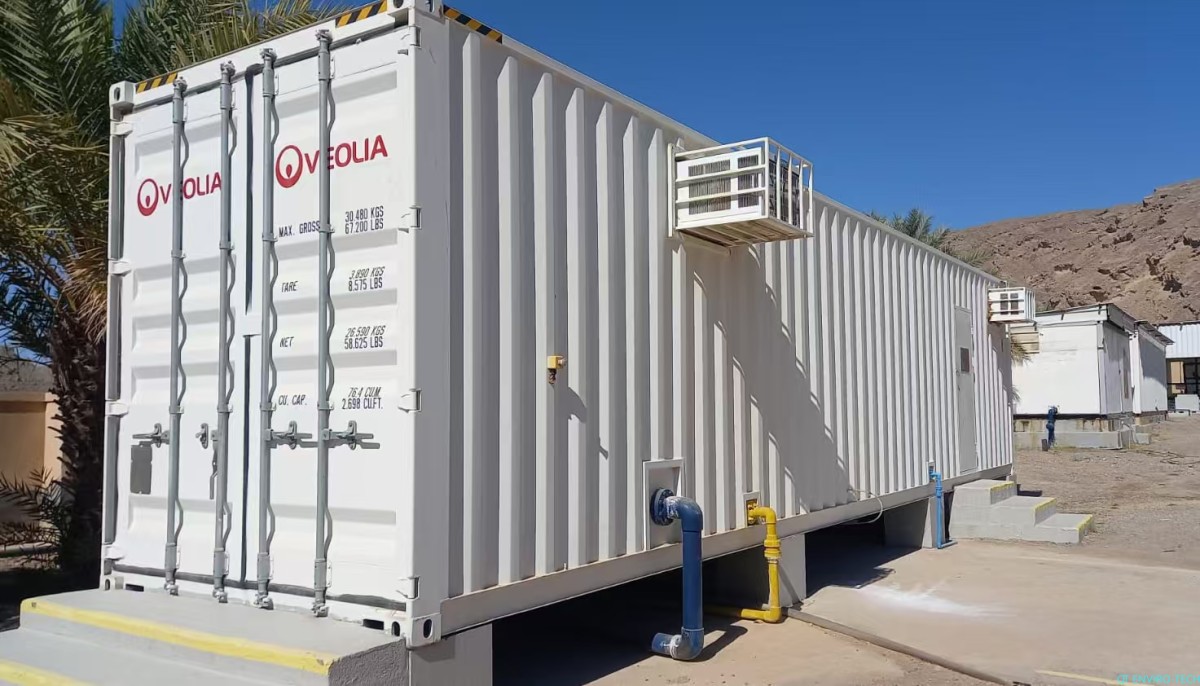
The main cost drivers over the operating life
1. Energy consumption
For seawater reverse osmosis, power is usually one of the largest recurring expenses. The required pressure depends on salinity, temperature, recovery rate, membrane condition, and the design of the high-pressure system. Small differences in energy performance become significant when the plant operates for long hours or produces water continuously.
Procurement teams should request expected power consumption under the actual feedwater conditions, rather than relying on a general figure. The comparison should also state whether the figure includes pretreatment, auxiliary equipment, controls, and other loads.
2. Pretreatment and membrane life
Pretreatment protects the RO membranes from suspended solids, biological growth, scaling, and fouling. If the feedwater quality changes seasonally or contains a high solids load, an undersized pretreatment system can increase chemical use, cleaning frequency, pressure losses, and membrane replacement costs.
Membranes are consumable components. Their replacement interval depends on feedwater quality, operating discipline, cleaning practices, and the quality of the pretreatment process. A realistic cost model should include membrane replacement, cleaning chemicals, cartridge filters, and disposal requirements instead of treating the membrane bank as a one-time purchase.
3. Maintenance, labor, and spare parts
Containerized desalination systems reduce civil construction and can shorten installation time, but they still require routine inspection and servicing. Pumps, valves, instruments, dosing equipment, filters, and control components all affect operating continuity.
Remote projects may face higher costs for technician travel, spare-parts shipping, and downtime. A supplier’s service model therefore matters alongside the equipment specification. Buyers should assess which parts are standard and locally available, which require specialist support, and how easily key components can be isolated and replaced.
Why site conditions can outweigh the equipment price
Logistics are often underestimated because the system arrives as a finished container or skid. Transport distance, lifting requirements, import duties, port handling, site access, electrical work, pipe connections, drainage, and foundations can add materially to the installed cost.
Containerized systems are attractive where construction time is limited or the plant may later be relocated. Their value is lower when the site requires extensive modifications to accommodate the container, when harsh ambient conditions demand additional protection, or when the available power supply cannot support the selected configuration.
Water quality also changes the cost profile. A brackish-water application may require less pressure than seawater RO, while wastewater reuse can demand more complex pretreatment and monitoring. The right comparison must use the same feedwater, product-water quality, recovery target, operating hours, and uptime assumption.
Standardized or customized: which costs less?
Customization is justified when it prevents chronic fouling, excessive energy use, or costly site modifications. It adds little value when it only changes nonessential features or creates proprietary components that complicate future maintenance.
How to build a credible life-cycle comparison
Before comparing quotations, define the production requirement in operational terms: capacity, daily operating hours, feedwater analysis, required water quality, expected recovery, power availability, discharge conditions, and the likely expansion path. Then calculate capital cost, installation, energy, consumables, labor, scheduled maintenance, membrane replacement, logistics, and downtime exposure over the planned operating period.
For systems ranging from small installations to medium-scale plants of several hundred cubic meters per hour, the most economical configuration will depend on those operating assumptions. A supplier offering both containerized and skid-mounted RO designs can help match the equipment form to the site, but the buyer should judge the proposal through its full cost model.
The most useful procurement question is therefore not “Which unit has the lowest price?” It is “Which configuration delivers the required water at a predictable cost under our actual site conditions?”
Recommendation
- What Drives the Total Cost of Containerized Desalination Systems Over Their Life?
- RO Skid Acceptance Testing: Verifying Flow, Salt Rejection, and Energy Use
- Wastewater Treatment Training Delegation from Costa Rica Visits QT ENVIRO-TECH
- How to calculate brine flow from a containerized desalination system
- QT ENVIRO-TECH Wins 250 m³/day Seawater Desalination Project on Gorée Island, Senegal
- Designing Emergency Water Supply Systems for Remote Sites With Unreliable Grid Power
- Happy National Day from QT ENVIRO-TECH
- How Do I Compare Containerized Desalination Suppliers?
- QT Enviro-Tech BWRO600 Brackish Water RO System Ships to Australia
- What Site Conditions Determine Coastal Desalination Reliability?