This project serves a company in Hungary and went into operation in 2025. It treats the wastewater generated in the production of ternary cathode materials for high-nickel power batteries, using lithium concentration from ternary cathode wastewater, ultrafiltration (UF) and reverse osmosis (RO) as its core technologies. The result is an efficient wastewater treatment and resource recovery system with a capacity of 432 m³/day. While concentrating and recovering lithium, the system also provides reliable support for local production, domestic and fire-fighting water, helping the client improve environmental performance and resource efficiency.
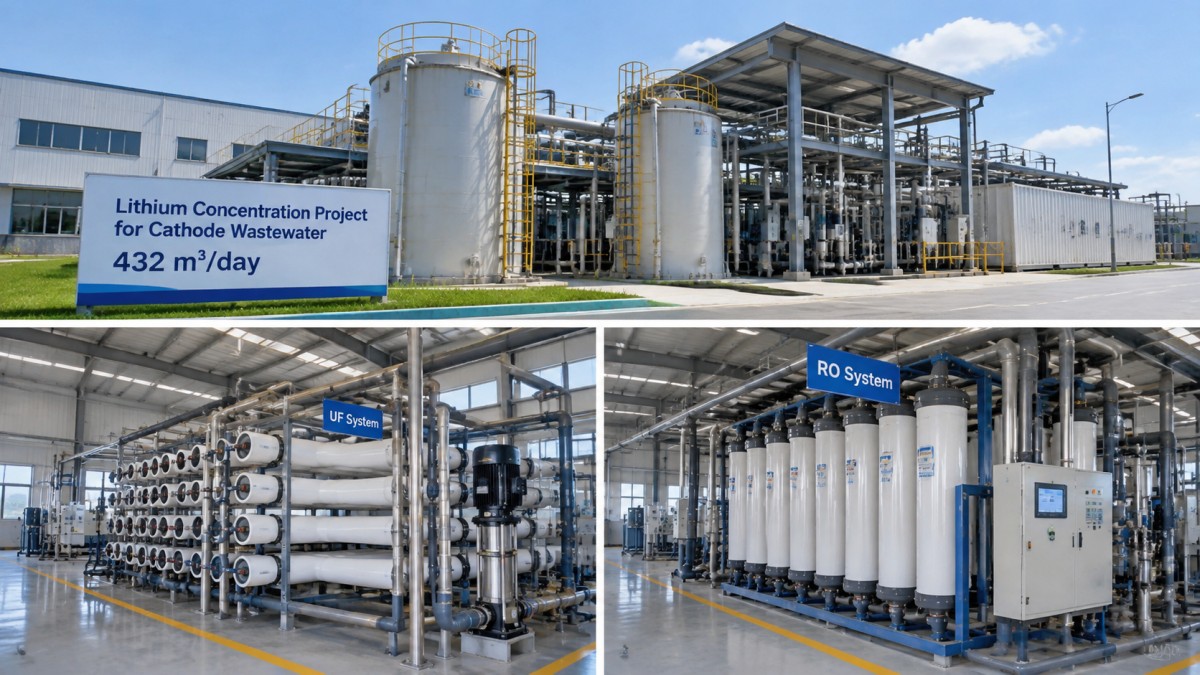
Treatment capacity and operating flexibility
Lithium concentration + UF + RO
Supporting local water supply
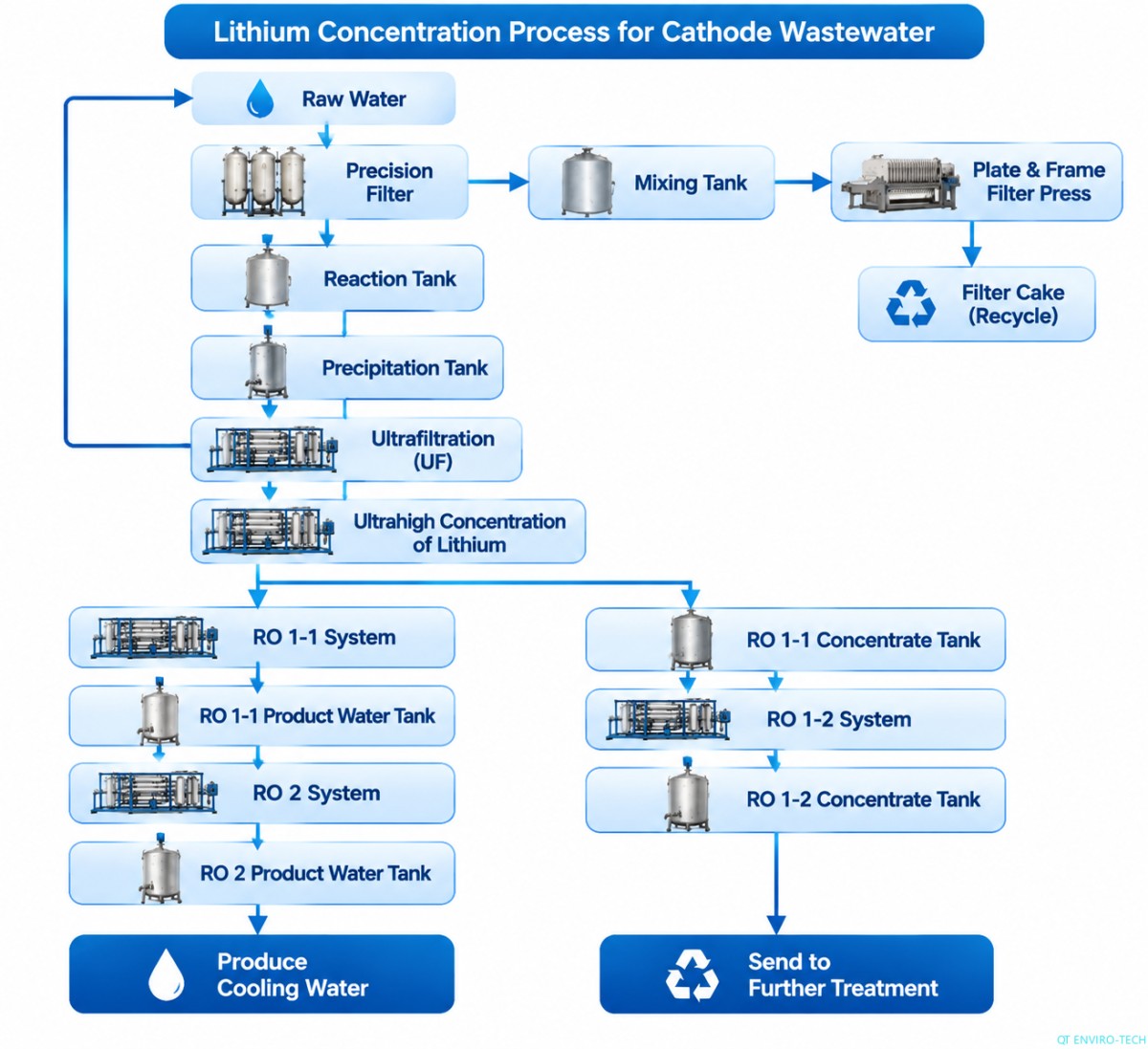
From raw water to evaporator feed
Precision filtration, reaction and buffer stages feed a two-stage ultrafiltration, followed by RO1-1 and RO2 permeate recovery. RO reject is staged through RO1-2 to the evaporator, while sludge is dewatered and filter cake is recovered.
Recommendation
- Membrane Concentration Pilot Plant for BC Project in South America (16.7 L/min)
- 50.4 MLD Skid-Mounted Seawater Desalination Plant for OCP Group, Morocco
- Australia Brackish Water Desalination Project | 600 m³/day BWRO System
- Containerized SWRO Desalination Project for Tiwi, Oman (350 m³/day)